Comparisons · 2026-11-01 · 6 min read
GPT Image 2.5 vs. Nano Banana Pro vs. Nano Banana 2: Same 3 Prompts, 9 Images, and Every Model Broke One Rule
OpenAI's GPT Image 2.5 arrived in September. We ran it against Google's Nano Banana Pro and Nano Banana 2 on a poster, a product shot and a portrait. All three nailed the hard part, and each one quietly ignored an instruction.
OpenAI released GPT Image 2.5 on September 8, 2026, in two versions: Flare, the default for most work, and Sunburst, which takes longer and is aimed at precise editing (OpenAI Developer Community). Google's answer is the Nano Banana family: Nano Banana Pro (Gemini 3 Pro Image) and Nano Banana 2 (Gemini 3.1 Flash Image), which Google pitched as Pro-level quality at Flash speed when it launched in February (Neowin).
Benchmarks are useful, but most people want to know one thing: if I type this, which model gives me something I can use? So we wrote three prompts that match what people actually make in November, ran each one once through each model, and put all nine results below, unedited.
How we tested
- Models: GPT Image 2.5 Flare, Nano Banana Pro and Nano Banana 2, all called through Vercel AI Gateway on November 1, 2026, the same way AirGallery's Create page calls them.
- One run per prompt per model, no retries and no cherry-picking. The first image is the one shown.
- Square 1024 × 1024 output. GPT Image 2.5 ran at high quality; the Nano Banana models used their defaults.
- Three prompts: a poster with exact text, a product photo with specific lighting, and a natural portrait.
Nine images is a small sample. Treat this as a field test, not a benchmark.
Test 1: A poster with exact text
The prompt asked for a vintage screen-printed poster with the headline "HOLIDAY NIGHT MARKET", a second line reading "DEC 12 · 5–10 PM · MAIN STREET", and a deep green and cream palette. Text inside images was the classic failure of AI image models for years.
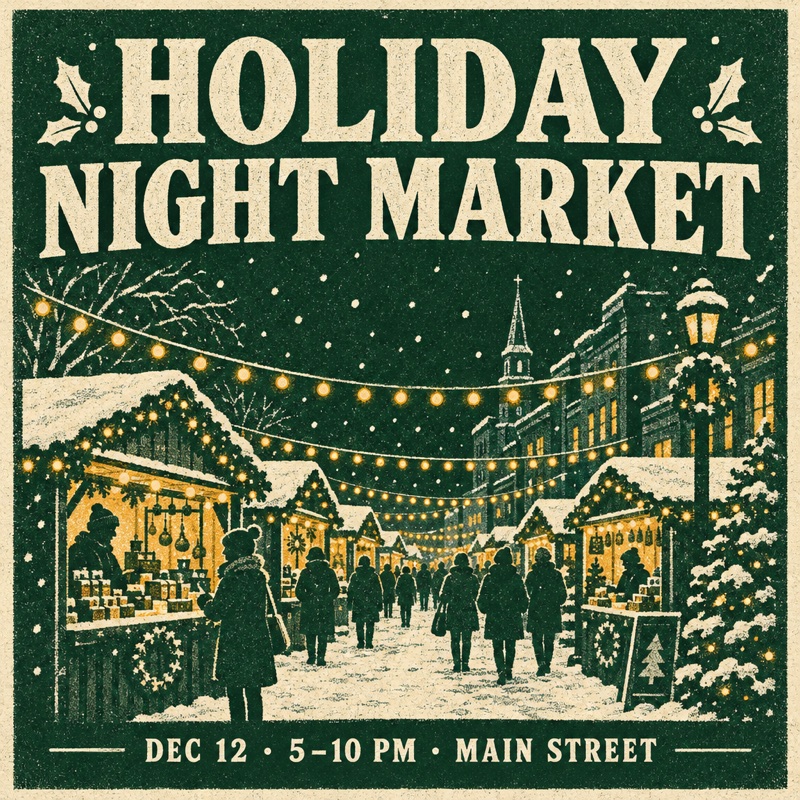
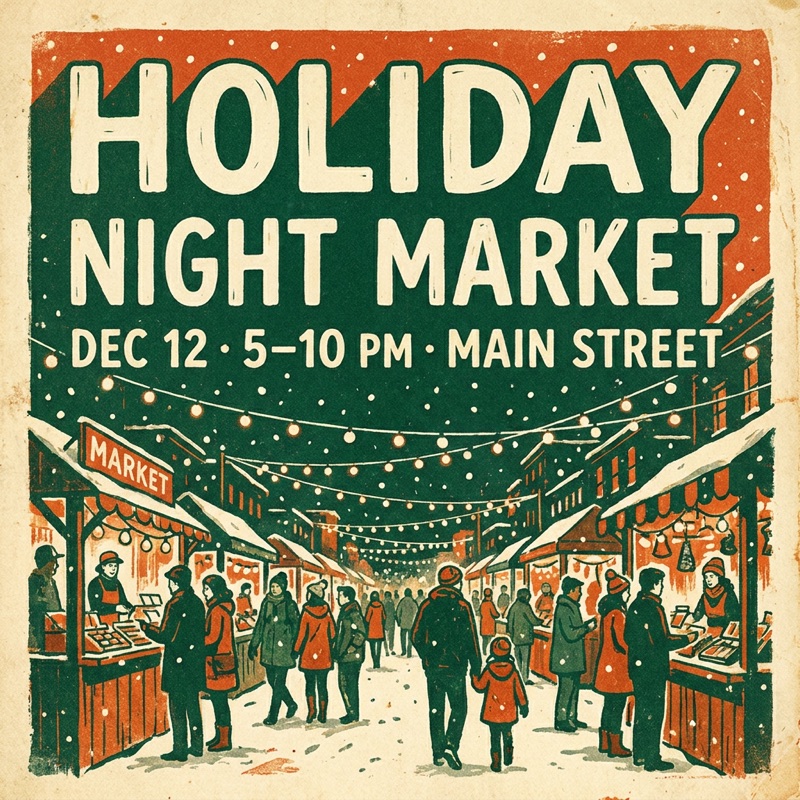
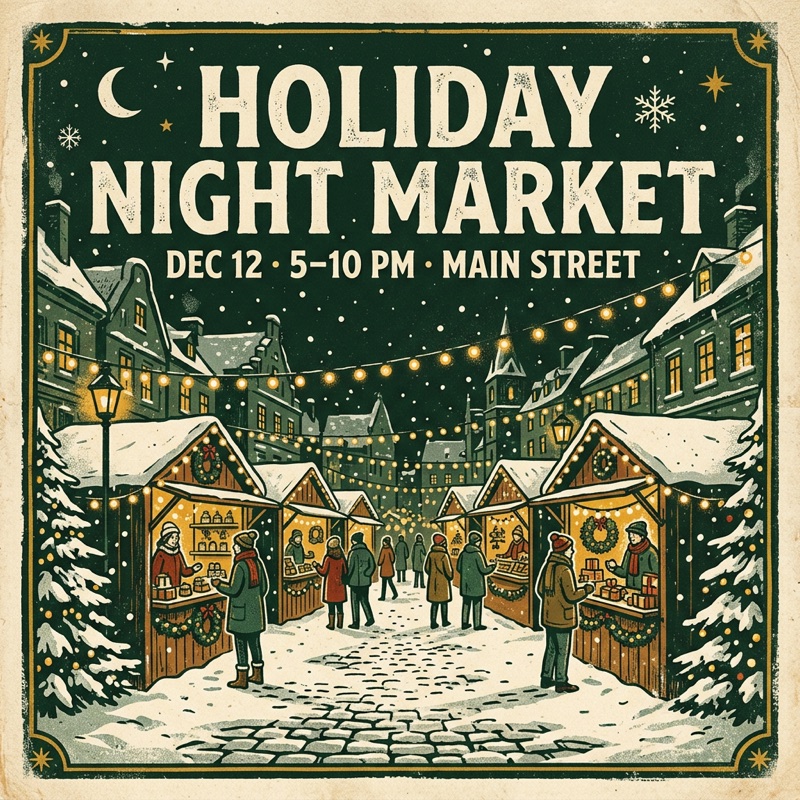
All three spelled both lines perfectly, including the middle dots and the en dash. That alone would have been headline news two years ago. The differences were in following the design brief. Flare stuck closest to it: green and cream only, with a grainy texture that actually reads as screen print. Nano Banana 2 also kept the palette and added a decorative gold border. Nano Banana Pro produced the boldest poster but swapped half the green for red, which the prompt never asked for, and added a "MARKET" sign of its own.
Winner: GPT Image 2.5 Flare, for doing exactly what it was told.
Test 2: A product photo
The prompt: a handmade speckled ceramic mug on a light oak table, soft morning light from the left, a pine sprig and a small wrapped gift in the soft-focus background, clean and minimal. This is the kind of shot small shops need for holiday listings.



All three got the window light from the left and convincing speckled glaze. Nano Banana Pro's image is the one you could drop straight into a store: an empty mug, a raw clay foot, the props pushed to one side, nothing competing with the product. Flare's is close behind and warmer, with coffee in the mug and a tag on the gift. Nano Banana 2 made a lovely photo, but it added a latte, a spoon and a linen napkin, which is more lifestyle shoot than "clean and minimal."
Winner: Nano Banana Pro. If you sell physical products, see our guide to fixing your holiday product photos before Cyber Monday, including Etsy's new rule on edited images.
Test 3: A natural portrait
The prompt asked for a woman in her 60s with silver hair and a cream knitted sweater, laughing by a window in soft winter daylight, with true-to-life skin and "no retouching look."



This is where the models split. Nano Banana Pro's portrait looks like it was shot on film: an unposed laugh, visible skin texture, a wooden chair and snow through a fogged window. Nano Banana 2 went wider and gave the scene a cozy, documentary feel, with natural texture and believable hands. Flare's is a sharp, flattering close-up, but the very white teeth and smooth finish read as polished stock photo, which is exactly the look the prompt ruled out.
Winner: Nano Banana Pro, with Nano Banana 2 a close second.
The pattern: every model broke one rule
- GPT Image 2.5 Flare followed the design brief best, then over-retouched the portrait.
- Nano Banana Pro produced the most realistic photos, then changed the poster's colors.
- Nano Banana 2 was solid everywhere, then added props to a shot that asked for minimal.
None of these failures is fatal, and all of them are fixable in one more run: repeat the instruction it ignored, more firmly. What the test shows is that the hardest problem, readable text, is now solved by all three. The differences are taste and obedience.
Speed and cost
In our single run, Nano Banana 2 finished the poster and mug in about 12 seconds each, Nano Banana Pro took 19 to 28 seconds, and Flare took 23 to 29 seconds. One Nano Banana 2 request, the portrait, took 82 seconds, so expect some variance. OpenAI says Images 2.5 is faster than Images 2.0, but its announcement gives no exact figure (OpenAI Developer Community).
On AirGallery, a Nano Banana 2 image costs 3 credits, Nano Banana Pro costs 6, and GPT Image 2.5 Flare or Sunburst costs 8. Credits never expire and there's no subscription.
Which one should you use?
- Posters, flyers, social graphics and anything with a strict brief: GPT Image 2.5 Flare.
- Product shots and realistic people: Nano Banana Pro.
- Drafts, lots of variations, and the best quality per credit: Nano Banana 2. For rough ideas, Nano Banana 2 Lite costs 2 credits.
- Precise edits to a photo you already have: GPT Image 2.5 Sunburst, which OpenAI built for exactly that.
The fastest way to choose is to run your own prompt through two of them. On Create you can switch models with one click and compare side by side, without an API key for either company.
Sources
- Introducing GPT Images 2.5 in the API and ChatGPT, OpenAI Developer Community, September 8, 2026.
- OpenAI on X: ChatGPT Images 2.5 announcement.
- Google launches Nano Banana 2, Neowin.
- Gemini 3.1 Flash Image (Nano Banana 2), Google Cloud documentation.
- Gemini 3.1 Flash Image on Vercel AI Gateway.